April 26th, 2021
Free Crochet Four Leaf Clover Pattern (Easy Shamrock Applique)
Free Crochet Four Leaf Clover Pattern (Easy Shamrock Applique)
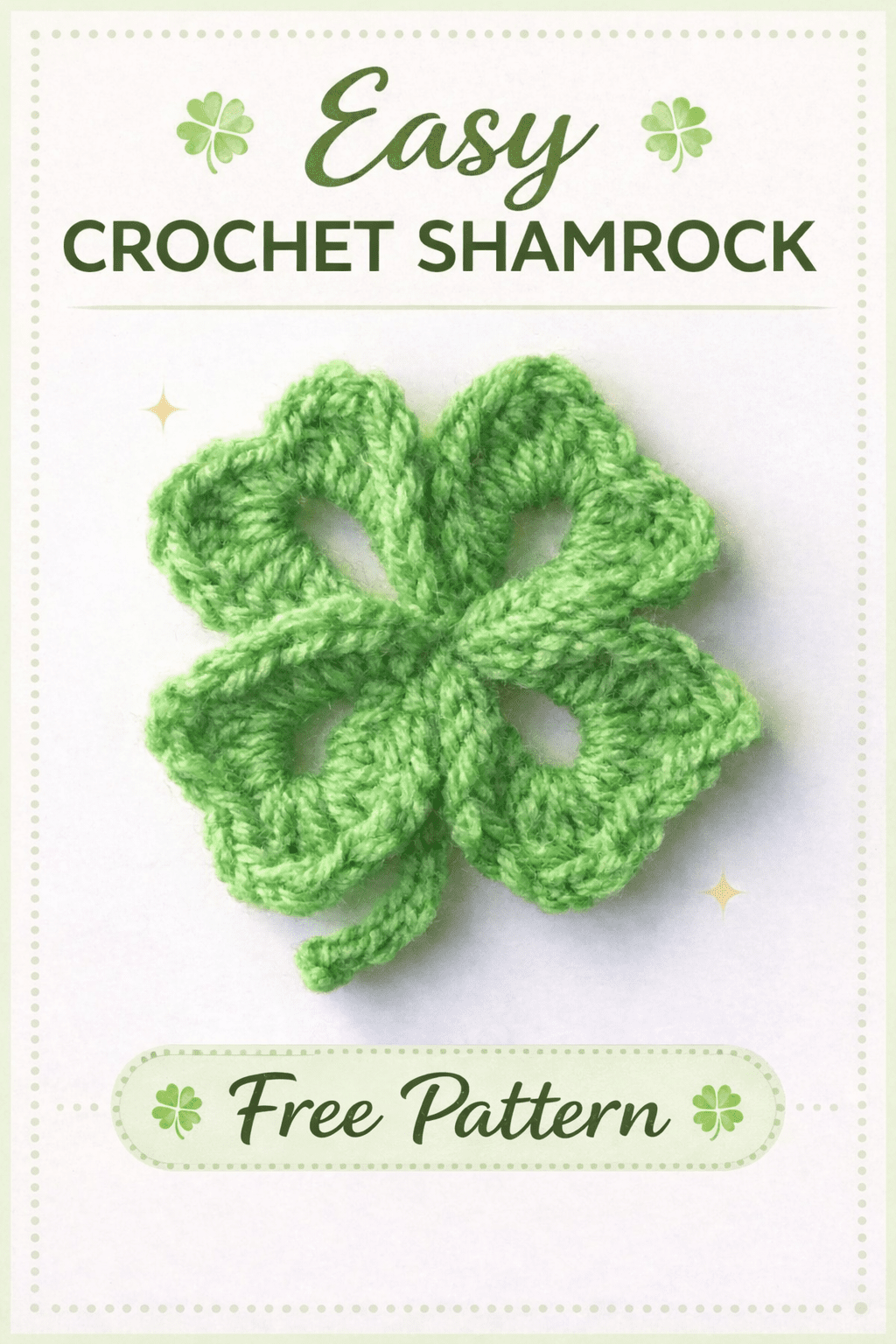
Looking for a quick St. Patrick’s Day crochet project? This free crochet four leaf clover pattern is the perfect tiny make!
This simple crochet shamrock works up in just two rounds, making it a great beginner-friendly project and a fun way to use up scrap yarn.
Crochet clovers are perfect for:
- St. Patrick’s Day decorations
- Crochet appliqués for hats or blankets
- Lucky charms for gifts
- Scrap yarn stash busters
- Garland or festive decorations
Once you make one, you’ll probably end up making a whole handful of them. 🍀
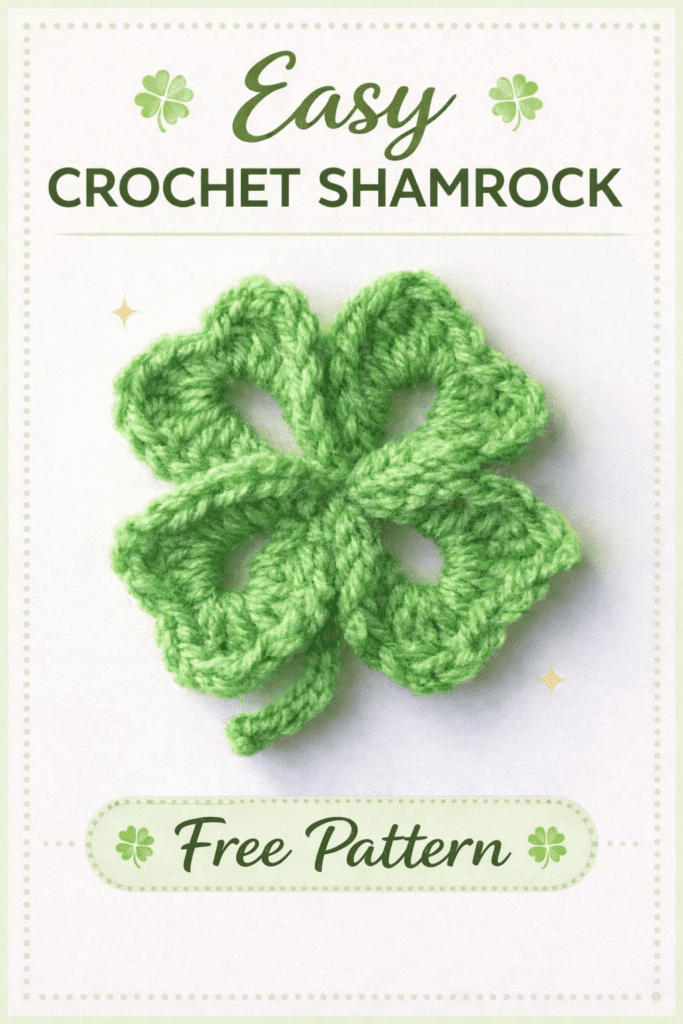
Pin this pattern so you can find it later!
Watch the Step-by-Step Tutorial

If you prefer following along visually, I walk through the entire clover step-by-step in the video:
Part 1 / Row 1
Part 2 / Row 2
Materials:
- bits of RedHeart Super Saver Yarn in Spring Green
- Crochet hook size I (5.50mm)
- Scissors
Abbreviations:
Ch = Chain(s)
Sc = Single crochet
Hdc: Half double crochet
Dc: Double crochet
Tr: Treble crochet
Sl st = Slip stitch
Pattern:
This pattern is worked in 2 rounds.
To Start:
Ch 3. Join with a sl st to the first chain to form a ring.
Rnd 1: *Ch 8, slst into the center of the ring* repeat 4 times. Ch 11, slst into the 2nd chain from the hook and into each of the remaining 9. Sl st into the center of the ring.
Rnd 2: In first and every ch 8 space, make the following stitches:
Sc, Hdc, 4 Dc, 2 Tr, Dc, Hdc, Sc, Hdc, Dc, 2 Tr, 4 Dc, Hdc, Sc. Sl st into the center of the ring.
Bind off and weave in your ends. Shape and flatten by hand.
Enjoy!
Tips for Perfect Crochet Clovers
✔ Use a slightly smaller hook if you want a tighter applique
✔ Steam block lightly if the leaves curl
✔ Add a chain tail to turn it into a garland
✔ Sew onto hats, bags, or baby blankets
The four-leaf clover is traditionally considered a symbol of luck, which is why it’s often used in decorations and crafts around St. Patrick’s Day.
Ways to Use Crochet Shamrocks
Once you make a few clovers, try using them for:
🍀 Crochet headbands
🍀 St. Patrick’s Day garlands
🍀 Baby blanket appliques
🍀 Gift toppers
🍀 Lucky keychains
They’re also adorable attached to crochet hats or tote bags.
Frequently Asked Questions
Is this crochet four leaf clover pattern beginner friendly?
Yes! This crochet clover pattern is beginner friendly and uses simple stitches like chains, single crochet, half double crochet, and double crochet. Even if you’re new to crochet, you should be able to follow along with the written pattern and video tutorial.
How long does it take to crochet a four leaf clover?
Most crocheters can complete this crochet shamrock in about 5–10 minutes, making it a great quick crochet project and perfect for using up small amounts of leftover yarn.
What yarn works best for crochet clovers?
Any worsted weight yarn works well for this pattern. Cotton yarn is great if you want a slightly firmer applique, while acrylic yarn works perfectly for decorative crochet projects and scrap yarn makes.
What can I use crochet shamrocks for?
Crochet shamrocks can be used for many St. Patrick’s Day crafts, including:
🍀 Hat or blanket appliques
🍀 Crochet garlands
🍀 Gift toppers
🍀 Scrap yarn projects
🍀 Lucky charms or keychains
They are a fun way to add a festive touch to your crochet projects.
Can I make this crochet clover larger or smaller?
Yes! You can easily adjust the size of the clover by using a larger or smaller crochet hook and different yarn weights. Thicker yarn will create a larger shamrock, while thinner yarn will produce a smaller applique.
Why are four leaf clovers considered lucky?
Four leaf clovers are traditionally believed to symbolize faith, hope, love, and luck, which is why they are commonly associated with St. Patrick’s Day and Irish folklore.
Share Your Makes
If you make this pattern, I’d love to see it!
Tag @seeloveshare on Instagram or share your project in our Facebook community so we can celebrate your lucky makes together.
More Free Crochet Patterns
You might also love these beginner-friendly patterns: