
All Blanket Patterns Crochet Knit
May 15th, 2018
Standard Blanket Sizes — Complete Guide for Knit & Crochet
Knowing the standard blanket sizes before you start a project saves hours of frogging and unnecessary stress. This complete standard blanket sizes guide covers every dimension you’ll need for knit and crochet projects — from tiny loveys all the way up to California King throws. Save it, print it, pin it; this is the reference I wish I’d had when I started.
I used to carry around a tiny post-it note with my standard blanket sizes scribbled on it (later a photo of that post-it on my phone) every time I started a new pattern. After years of designing baby blankets, throws, and afghans, I’ve finally compiled all the standard blanket sizes into one comprehensive guide. Use it for gift planning, pattern design, or just figuring out how big to make that chunky throw you’ve been dreaming about.
Why Standard Blanket Sizes Matter
✔ Plan yarn quantities accurately before you start
✔ Avoid the disappointment of a “too small” finished blanket
✔ Make your blanket fit a specific bed or recipient
✔ Calculate stitch counts based on finished standard blanket sizes
✔ Choose the right gauge swatch dimensions
✔ Save time, money, and yarn frustration
✔ Standard blanket sizes serve as a reliable starting point — adjust to taste
Baby & Kid Blanket Sizes
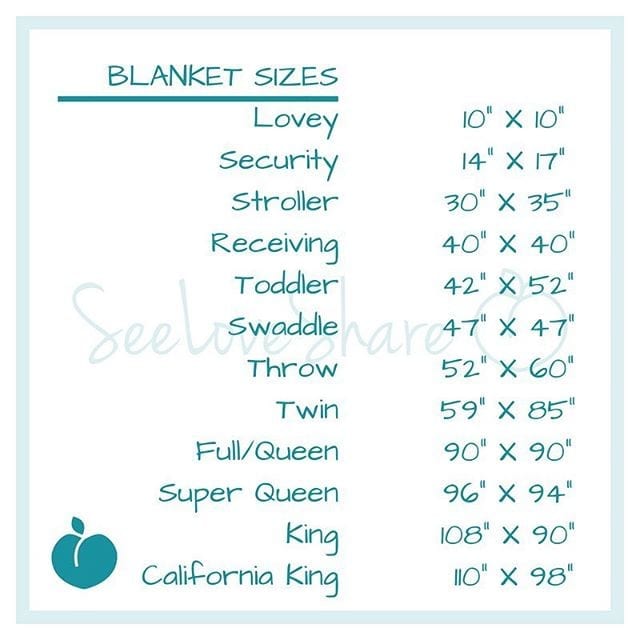
Baby and kid blanket dimensions vary based on how the blanket will be used — loveys are small comfort objects for tiny hands, security blankets work as everyday cuddle companions, swaddles need to wrap newborns securely, and stroller blankets need to span a car seat or pram. Here are the standard baby blanket sizes used across my pattern designs:
| Type | Dimensions (inches) | Use |
|---|---|---|
| Lovey | 10″ x 10″ | Tiny hands, comfort objects |
| Security | 14″ x 17″ | Everyday cuddle companion |
| Stroller | 30″ x 35″ | Stroller, car seat, light covering |
| Receiving | 40″ x 40″ | Square receiving blanket for newborns |
| Toddler | 42″ x 52″ | Toddler bed and big-kid naps |
| Swaddle | 47″ x 47″ | Large square for full newborn swaddles |
For baby blanket patterns at these standard blanket sizes, check out our crochet baby blanket patterns and knit baby blanket patterns collections.
Throw Blanket Size
The throw is the most popular size to crochet or knit — versatile, gift-friendly, and the perfect couch companion. This standard blanket size works for adult lap blankets, couch throws, and travel companions:
| Type | Dimensions (inches) | Use |
|---|---|---|
| Throw | 52″ x 60″ | Classic couch throw, adult lap blanket, reading nook companion |
Bed Blanket Sizes (Twin through California King)
Bed-sized blankets are the most ambitious projects but also the most rewarding. These standard blanket sizes are sized to fit standard mattresses with appropriate overhang on three sides (top, sides):
| Bed Size | Dimensions (inches) |
|---|---|
| Twin | 59″ x 85″ |
| Full / Queen | 90″ x 90″ |
| Super Queen | 96″ x 94″ |
| King | 108″ x 90″ |
| California King | 110″ x 98″ |
Heads up: a king-sized blanket can take 30-60+ hours and 4,000+ yards of yarn. Most blanket designers (myself included) recommend starting at throw size for your first big project. Once you’ve mastered throw-size patterns, scaling up to the larger standard blanket sizes is just more of the same.
How to Calculate Stitches for Standard Blanket Sizes
Once you know the standard blanket sizes you want to hit, you can calculate your stitch count exactly:
- Make a gauge swatch in your chosen stitch — at least 6″ x 6″ so you can measure 4″ accurately.
- Count stitches per inch. Example: if 16 stitches measure 4 inches, your gauge is 4 stitches per inch.
- Multiply by desired width. Example: 4 stitches per inch × 52″ wide = 208 stitches.
- Adjust for pattern repeat. If your stitch repeats every 6 stitches, round 208 to the nearest multiple of 6 (204 or 210).
- Add edging stitches. Most patterns have 1-3 selvedge stitches on each side that don’t count toward the main pattern.
How Much Yarn for Each of the Standard Blanket Sizes?
Yarn quantities depend on stitch type, hook/needle size, and how dense the fabric is. As a rough estimate using worsted weight (#4) yarn for medium-density stitches:
| Size | Approx. Yards (worsted) | Approx. Hours to Make |
|---|---|---|
| Lovey (10×10) | 150-250 | 2-4 |
| Security (14×17) | 300-400 | 4-6 |
| Stroller (30×35) | 900-1100 | 12-15 |
| Receiving (40×40) | 1300-1500 | 18-25 |
| Toddler (42×52) | 1500-1800 | 22-30 |
| Swaddle (47×47) | 1600-1900 | 22-30 |
| Throw (52×60) | 1800-2200 | 30-40 |
| Twin (59×85) | 2800-3300 | 50-65 |
| Full/Queen (90×90) | 4500-5500 | 80-110 |
| Super Queen (96×94) | 5000-6000 | 90-120 |
| King (108×90) | 5500-6500 | 100-140 |
| California King (110×98) | 6500-7500 | 120-160 |
These are starting estimates. Chunkier yarn covers more area per yard but uses more yardage by weight; bobble or cable stitches eat yarn faster than basic single crochet. Always buy a couple extra skeins for any of the larger standard blanket sizes — running out two rows from the end is heartbreaking.
Tips for Choosing the Right Blanket Size
- Match the recipient: baby gift → lovey or security; new-mom welcome → receiving or swaddle; couch friend → throw; wedding gift → queen.
- Consider drape: bed blankets need extra inches for overhang. The standard blanket sizes in the bed section assume modest drape — add 6-8″ each side for generous overhang.
- Chunky yarn = bigger illusion: a chunky throw at 52×60″ looks more substantial than a worsted-weight one at the same size.
- Don’t size up too eagerly: first blanket project? Start at throw size. You can scale to queen on your second.
- Width matters more than length: for couch throws, getting the width right (~52″) matters more than perfect length.
- Block-finished measurements: blocking can add 2-4″ in each direction. Account for it before binding off.
- Save for next time: bookmark this standard blanket sizes guide so you can reference it for every future project.
Frequently Asked Questions
Are these standard blanket sizes the same for knit and crochet? Yes — the finished dimensions are universal. The only difference between knit and crochet is your stitch count (gauge), not the target dimensions.
Do bed blanket sizes include the drape (overhang)? The dimensions in the bed table assume modest drape on three sides (top, left, right). Add 6-8″ each side for generous overhang.
What’s the most popular blanket size to crochet? The throw at 52″ x 60″. It’s the sweet spot for couch use, gifting, and time investment.
What’s the difference between a swaddle and a receiving blanket? A swaddle is larger (47″ x 47″) to wrap a newborn completely, while a receiving blanket (40″ x 40″) is sized for general baby use — covering, swaddling, or layering.
How do I adapt a pattern to a different size? Identify the pattern’s stitch repeat, find the multiple of that repeat closest to your target width (in stitches), and adjust row count to hit your target length.
What’s the difference between a throw, an afghan, and a blanket? “Afghan” and “throw” are usually interchangeable. “Blanket” typically refers to bed-sized; “throw” is couch-sized; “afghan” comes from the Afghani craft tradition and is used loosely for any decorative blanket.
More Pattern Guides & Tutorials You’ll Love
- Browse Crochet Baby Blanket Patterns
- Browse Knit Baby Blanket Patterns
- Browse Crochet Throw & Blanket Patterns
- Browse Knit Throw & Blanket Patterns
 Honeycomb Knit Throw — Chunky Cable
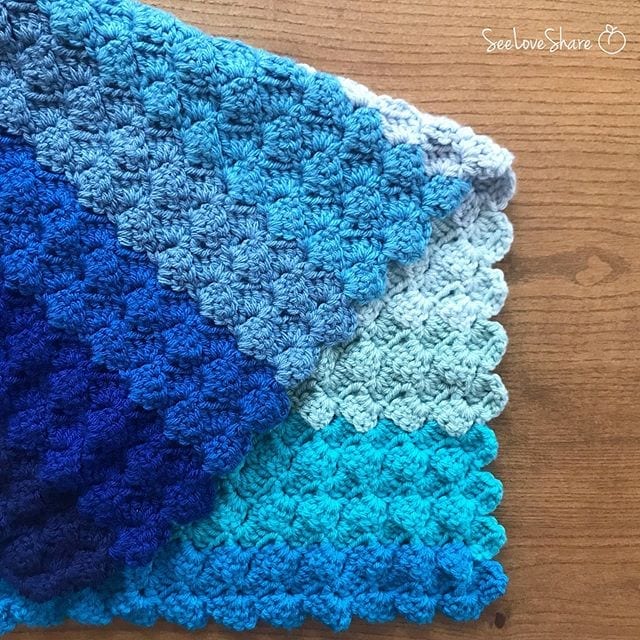
 Easy Peasy Crochet Baby Blanket
Save This Standard Blanket Sizes Guide
Want to come back to this standard blanket sizes guide later? Save it to Pinterest so you can reference it for every future knit or crochet project — and share it with your crafty friends!