

Crochet Free Crochet Free Tutorials
November 18th, 2020
Crochet Knit Stitch Tutorial — Waistcoat Stitch Step by Step
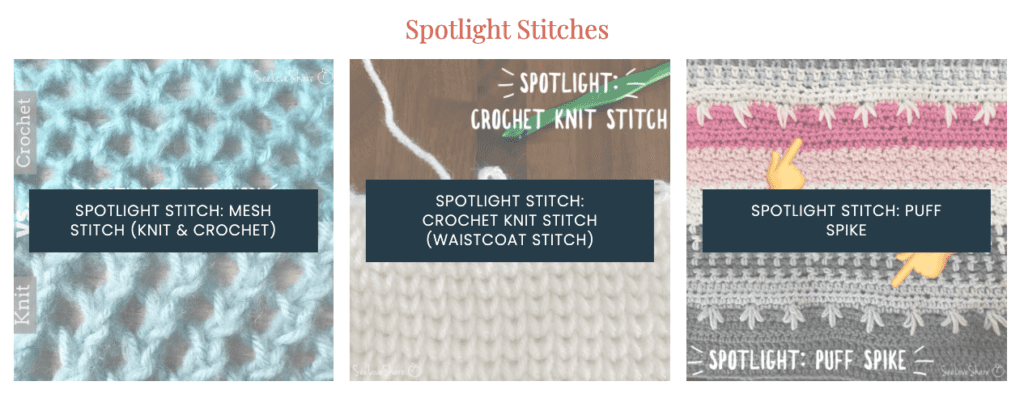
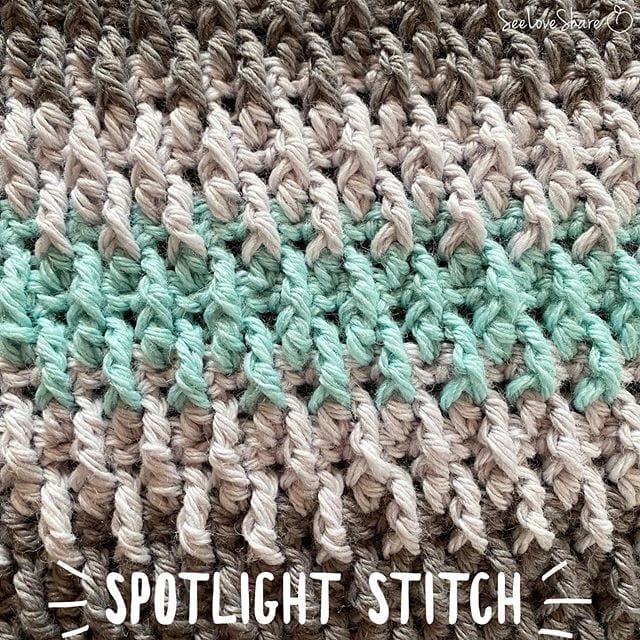
This crochet knit stitch tutorial walks you through the waistcoat stitch — also called the knit stitch in crochet — a clever single crochet variation that mimics the look of stockinette knitting. The waistcoat stitch is a single crochet worked between the left and right post of the stitch below, creating a smooth, uniform “V” pattern that gives crochet projects a polished, knitted appearance. It’s especially useful for colorwork patterns, lettering, and anywhere you want crisp vertical stitch alignment.
Once you’ve worked through this crochet knit stitch tutorial, you’ll start seeing places to use it everywhere — beanies, sweaters, baby items, anything where you want the look of knit but the speed and structure of crochet. It takes a bit of practice to get your tension right (the stitch can feel tight at first), but the polished finished look is worth the learning curve.
Love Textured Stitches?
Crochet Cable Pumpkin Pattern
Once you’ve mastered this crochet knit stitch tutorial, put your textured-stitch skills to work on my bestselling Crochet Cable Pumpkin — beautiful cabled texture, beginner-friendly, printable PDF on Etsy. Use code SEELOVE15 for 15% off.
Why You’ll Love This Crochet Knit Stitch Tutorial
- Looks like knitting — creates a smooth, uniform “V” stitch pattern that mimics stockinette
- Perfect stitch alignment — stitches stack vertically, making it ideal for colorwork and lettering
- Single crochet base — if you can single crochet, you can learn this stitch
- Polished finish — gives any crochet project a more elevated, professional look
- Versatile — works in flat panels, in the round, and in colorwork
- Great for hats and bags — the structured fabric holds shape beautifully
What Is the Waistcoat Stitch in This Crochet Knit Stitch Tutorial?
The waistcoat stitch covered in this crochet knit stitch tutorial (also called the crochet knit stitch or split single crochet) is a variation of single crochet where you insert your hook between the two vertical posts of the stitch below — the “V” — instead of under the top loops. The result is a stitch that looks remarkably like a knit “V” stitch, with clean vertical alignment that’s perfect for tapestry crochet, colorwork, and lettering projects.
It’s typically worked in the round with the right side facing at all times, though you can also work it in flat rows with some practice. The stitch creates a denser, more structured fabric than traditional single crochet, which makes it especially good for items that need to hold their shape — bags, baskets, hats, and home decor pieces.
How to Crochet the Knit Stitch (Waistcoat Stitch)
Step 1: Foundation
Start with a row of regular single crochet stitches. This forms the foundation row that you’ll work the waistcoat stitch into. The waistcoat stitch is typically worked in the round (joined or unjoined), with the right side facing at all times.
Step 2: Identify the Posts
Look at the next stitch in your foundation row. You’ll see two vertical “legs” or posts forming a V shape on the front of the stitch. Instead of inserting your hook under the top loops (the way you would for a standard single crochet), you’ll insert it directly into the center of that V — between the two posts.
Step 3: Work the Stitch
- Insert your hook between the two posts of the stitch below (into the center of the V)
- Yarn over and pull up a loop (you’ll have 2 loops on your hook)
- Yarn over and pull through both loops
- You’ve completed one waistcoat stitch
Step 4: Continue
Continue this crochet knit stitch tutorial technique by inserting your hook between the posts of each stitch around. Keep your tension consistent — the waistcoat stitch can feel tight at first because you’re working into a smaller space than a standard single crochet. Going up a hook size or two from what you’d normally use can help.
Tips for the Crochet Knit Stitch Tutorial
- Use a larger hook — go up one or two sizes from what you’d normally use for single crochet to compensate for the tighter stitch placement
- Keep tension loose — if you’re a tight crocheter, focus on relaxing your grip while learning this stitch
- Work in the round — the waistcoat stitch is much easier in the round than in flat rows because you’re always working on the right side
- Practice with light-colored yarn — it’s easier to see the V shape clearly when you’re learning
- Take your time on the first row — the second and subsequent rows are much easier once your foundation row is established
- Don’t worry about speed — the waistcoat stitch is slower than regular single crochet at first, but you’ll speed up with practice

Whatcha think? Comment below to let us know!
Want to check out more Spotlight Stitches?
Check them all out right here!
Patterns That Use This Stitch
- Brioche Stitch Ombre Pillow
- Brioche Six-Point Star Pattern
- The Easiest Crochet Hat Pattern — Free Beginner Beanie
Best Projects for the Crochet Knit Stitch Tutorial Technique
Once you’ve got the technique down, here are the kinds of projects where the waistcoat stitch really shines:
- Tapestry crochet colorwork — the perfect vertical stitch alignment makes color changes crisp and clean
- Crochet beanies and hats — the structured fabric holds shape beautifully
- Project bags and totes — denser fabric means sturdier finished bags
- Lettering and graphic patterns — readable text needs precise stitch alignment
- Sweaters and tops — for that “did you knit or crochet this?” finish
- Baby items — the smooth, knit-like texture is soft against baby skin
Common Crochet Knit Stitch Tutorial Mistakes to Avoid
- Inserting under the top loops — that’s a regular single crochet, not the waistcoat stitch. Always insert between the posts (into the V).
- Pulling stitches too tight — keeps the V from forming clearly. Loose tension is your friend here.
- Working flat rows on your first try — start in the round to keep the right side always facing you.
- Skipping the foundation row — the waistcoat stitch needs a single crochet foundation to work into.
- Using the same hook size as standard single crochet — this stitch needs more room to breathe.
More Free Crochet Tutorials You’ll Love
If you found this crochet knit stitch tutorial helpful, here are more free crochet tutorials and patterns to add to your queue:
Try this crochet knit stitch tutorial and tag @seeloveshare on Instagram — I love seeing your stitch experiments! 🧶
Crochet Knit Stitch Tutorial FAQ
Is the crochet knit stitch the same as the waistcoat stitch?
Yes — “crochet knit stitch,” “waistcoat stitch,” and “split single crochet” all refer to the same technique. Different crochet communities just use different names for it. This crochet knit stitch tutorial covers them all under one umbrella.
Can I do the waistcoat stitch in flat rows?
Yes, but it’s much trickier than working in the round. When you turn your work to start a new row, the V shape is harder to see from the back. Most makers — including me — recommend starting with in-the-round projects (like a hat) until you’re confident, then trying flat panels.
Why does my waistcoat stitch fabric look tight and bunched?
The most common cause is hook size. Because you’re inserting between two posts instead of under two top loops, you’re working into a smaller space. Going up one or two hook sizes from what you’d use for standard single crochet usually fixes it. Loosening your overall tension helps too.
What yarn weight is best for the waistcoat stitch?
Worsted (#4) or DK (#3) weight yarns show off the V shape most clearly while staying easy to see. Avoid fuzzy or textured yarns when you’re learning — a smooth, light-colored yarn lets you see the stitch structure as you work this crochet knit stitch tutorial.
Can I use this stitch for colorwork or tapestry crochet?
Absolutely — the perfect vertical stitch alignment is exactly what tapestry crochet and colorwork need. The clean V grid means your colors line up cleanly, which is why so many lettering and graphic crochet patterns specify the waistcoat stitch.
Do I need a special hook for the crochet knit stitch tutorial?
No special hook needed. A standard inline or tapered crochet hook works fine — just go up a size or two from your normal single crochet hook. Some makers find inline hooks (like Susan Bates) easier to insert between the posts than tapered hooks (like Boye).
More Stitch Tutorials You’ll Love
 Alpine Stitch Crochet Tutorial — dense, gorgeous texture with step-by-step photos
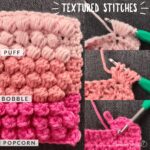
 How to Crochet the Bobble Stitch — squishy raised texture for pillows and blankets
- Textured Crochet Stitches Round-Up — a whole collection to explore next
- The Ultimate Guide to Blocking — finish your textured projects beautifully

Save This Crochet Knit Stitch Tutorial for Later
Want to come back to this crochet knit stitch tutorial later? Save it to Pinterest so you can find it next time you’re starting a textured-stitch project. I’d love to see your waistcoat stitch experiments — tag @seeloveshare on Instagram! 🧶
This crochet knit stitch tutorial, photos, and instructions are © SeeLoveShare LLC. Feel free to use the technique in your own projects — please don’t redistribute the tutorial content. Thank you for supporting an independent designer!