
May 9th, 2018
Types of Yarn — Complete Yarn Weights Guide
Types of Yarn – If you’ve ever stood in the yarn aisle staring at numbers, symbols, and weight categories wondering what any of it actually means — this is your guide. Understanding types of yarn is the single biggest unlock for choosing the right yarn for your project, and once you’ve got it down, you’ll never grab the wrong skein for a baby blanket or a scarf again.
This complete guide covers all 8 standard yarn weights (from #0 lace to #7 jumbo), what each weight is best used for, what hook or needle size pairs with it, and which popular yarn brands fall into each category. Bookmark this page or pin it to your Pinterest board — you’ll come back to it more than you think.
What are the types of yarn weights?
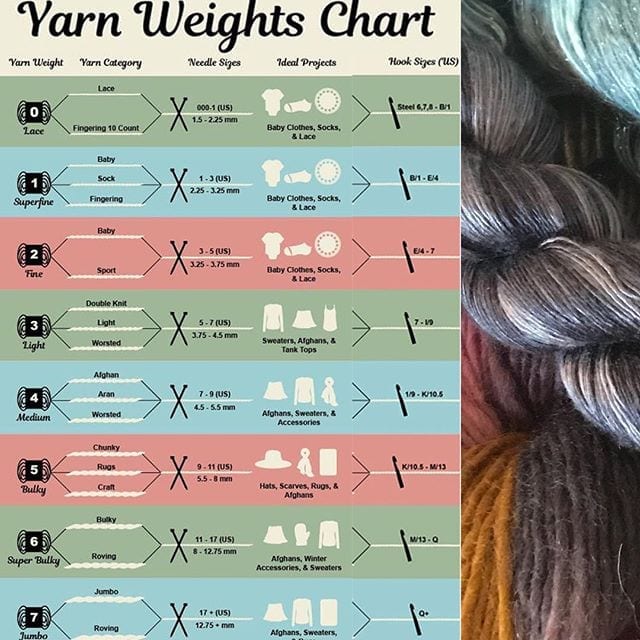
“Yarn weight” doesn’t refer to how heavy a ball of yarn is — it refers to how thick the strand of yarn is. The Craft Yarn Council established a standard numbering system from 0 (the finest) to 7 (the chunkiest), so you can quickly identify what a yarn is best suited for at a glance.
Most yarn labels include this number inside a small skein-shaped icon. Once you know what each number means, you can shop for yarn — online or in person — with total confidence.
The 8 standard types of yarn weights explained
#0 — Lace Weight Yarn
- Also called: Lace, cobweb, fingering 10-count thread
- Recommended hook: 1.5–2.25 mm (US 6 to B/1)
- Recommended needle: 1.5–2.25 mm (US 000 to 1)
- Best for: Delicate shawls, lace doilies, lightweight lace garments, fine thread crochet
- Typical gauge: 33–40 sts per 4″ (crochet) / 33–40 sts per 4″ (knit)
#1 — Super Fine (Sock/Fingering)
- Also called: Sock, fingering, baby
- Recommended hook: 2.25–3.5 mm (US B/1 to E/4)
- Recommended needle: 2.25–3.25 mm (US 1 to 3)
- Best for: Socks, lightweight shawls, lacy garments, delicate baby items
- Typical gauge: 21–32 sts per 4″
#2 — Fine (Sport/Baby)
- Also called: Sport, baby
- Recommended hook: 3.5–4.5 mm (US E/4 to 7)
- Recommended needle: 3.25–3.75 mm (US 3 to 5)
- Best for: Baby clothes, lightweight sweaters, accessories with drape
- Typical gauge: 16–20 sts per 4″ (crochet) / 23–26 sts per 4″ (knit)
#3 — Light (DK/Light Worsted)
- Also called: DK (double knitting), light worsted
- Recommended hook: 4.5–5.5 mm (US 7 to I/9)
- Recommended needle: 3.75–4.5 mm (US 5 to 7)
- Best for: Lightweight sweaters, baby blankets, dishcloths, summer garments
- Typical gauge: 12–17 sts per 4″ (crochet) / 21–24 sts per 4″ (knit)
- Examples: Bernat Softee Baby Cotton, Patons Grace
Shop the materials


#4 — Medium (Worsted/Aran)
- Also called: Worsted, aran, afghan
- Recommended hook: 5.5–6.5 mm (US I/9 to K/10.5)
- Recommended needle: 4.5–5.5 mm (US 7 to 9)
- Best for: Afghans, throws, scarves, hats, mittens, sweaters — the most versatile and popular weight
- Typical gauge: 11–14 sts per 4″ (crochet) / 16–20 sts per 4″ (knit)
- Examples: Red Heart Super Saver, Lily Sugar’n Cream
Worsted is also the weight most adult garment patterns are written for. My First Cardi, a free beginner cardigan, takes roughly 1,486 yards of worsted in size S, which gives you a sense of what a full-length garment asks for.
#5 — Bulky (Chunky)
- Also called: Bulky, chunky, craft, rug
- Recommended hook: 6.5–9 mm (US K/10.5 to M/13)
- Recommended needle: 5.5–8 mm (US 9 to 11)
- Best for: Cozy throws, quick scarves, chunky hats, fall and winter accessories
- Typical gauge: 8–11 sts per 4″ (crochet) / 12–15 sts per 4″ (knit)
- Examples: Patons Inspired #5 Bulky, Bernat Softee Chunky
#6 — Super Bulky
- Also called: Super bulky, super chunky, roving
- Recommended hook: 9–15 mm (US M/13 to Q)
- Recommended needle: 8–12.75 mm (US 11 to 17)
- Best for: Fast-finish chunky blankets, oversized scarves, big cozy accessories
- Typical gauge: 7–9 sts per 4″ (crochet) / 7–11 sts per 4″ (knit)
- Examples: Bernat Blanket, Bernat Wavelength, Caron Colorama Halo
#7 — Jumbo
- Also called: Jumbo, roving, arm-knitting yarn
- Recommended hook: 15 mm and larger (US Q and larger)
- Recommended needle: 12.75 mm and larger (US 17 and larger)
- Best for: Statement throws, arm-knitting projects, oversized pet beds, dramatic chunky home decor
- Typical gauge: 6 sts or fewer per 4″
How to pick the right yarn weight for your project
The fastest way to choose a yarn weight is to start with the project type. Here’s a quick cheat sheet:
- Baby blankets: #3 light (DK) or #4 worsted for soft drape, or #6 super bulky for fast-finish chunky throws
- Adult throws and afghans: #4 worsted (most popular) or #5 bulky for extra cozy
- Hats and beanies: #4 worsted is the classic choice; #5 bulky for chunky styles
- Scarves and cowls: #4 worsted or #5 bulky; #6 super bulky for statement pieces
- Sweaters and cardigans: #3 DK or #4 worsted (most patterns); #2 sport for fine garments
- Socks: #1 super fine (sock/fingering) almost exclusively
- Dishcloths and washcloths: #4 worsted cotton (Lily Sugar’n Cream is the classic)
- Shawls: #0 lace or #1 super fine for traditional drape; #3 DK for cozier wraps
- Amigurumi and plushies: #4 worsted with a smaller hook for tight stitches; #3 DK for finer details
- Statement chunky blankets: #6 super bulky or #7 jumbo
Why types of yarn weight matters more than fiber
You can swap cotton for acrylic, wool for cotton, or a blend for a single fiber — and your project will mostly work the same way. But swap a #4 worsted for a #6 super bulky and your project will look completely different (and might not fit anyone).
That said, fiber still matters for the final feel and performance:
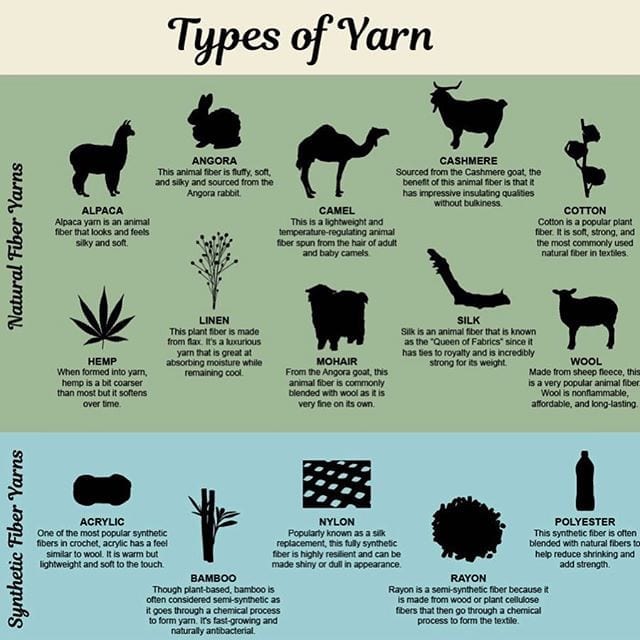
- Cotton: Breathable, machine washable, no stretch. Best for baby items, summer garments, dishcloths.
- Wool: Warm, has memory and stretch, water-repellent. Best for winter accessories and garments.
- Acrylic: Affordable, machine washable, comes in tons of colors. Best for beginner projects, kids items, easy-care blankets.
- Blends: Combine properties of multiple fibers. Read the label to know what you’re getting.
- Specialty fibers (cashmere, alpaca, mohair, silk): Luxury feel, special drape, often more expensive.
Free patterns sorted by types of yarn weight
Want to try out a specific yarn weight? Here are some popular SeeLoveShare patterns sorted by what yarn weight they use:
#3 Light (DK) yarn patterns
- Starburst Crochet Baby Blanket — textured fan stitches in soft cotton
- Crochet Spring Baby Sweater — top-down raglan in DK cotton
#4 Worsted weight yarn patterns
- Crochet Flower Blossom Afghan — vintage flower granny squares
- Crochet Mixed Cluster Blanket — modern textured cluster pattern
- Festival of Lights Hanukkah Garland — 8 numbered pouches
#5 Bulky yarn patterns
- Alpine Candy Striped Baby Blanket — textured candy stripes
#6 Super Bulky yarn patterns
- Easy Peasy Crochet Baby Blanket — fast-finish in Bernat Blanket yarn
- Seersucker Stitch Knit Throw — beginner-friendly chunky throw
Frequently asked questions about types of yarn and weights
What is worsted weight yarn?
Worsted weight yarn is the #4 medium yarn weight — the most popular and versatile category. It’s the standard yarn used for afghans, hats, scarves, and most beginner-friendly projects. If a pattern just says “yarn” without specifying weight, it almost always means worsted.
What weight is DK yarn?
DK (which stands for “double knitting”) is the #3 light yarn weight. It’s slightly thinner than worsted and works beautifully for lightweight sweaters, baby clothes, and summer-friendly garments. It produces a softer drape than worsted weight.
What’s the best yarn weight for a baby blanket?
The best yarn weight for a baby blanket depends on the look you want. #3 DK or #4 worsted in cotton gives you a classic, soft, machine-washable baby blanket. #6 super bulky (like Bernat Blanket yarn) gives you a fast-finish plush blanket. For a baby shower gift you want to finish quickly, super bulky is the go-to.
What is the difference between worsted and aran yarn?
Worsted and aran are both classified as #4 medium yarn weight. In the US, the terms are often used interchangeably. In the UK, aran is slightly thicker than worsted, but in practice you can usually swap them with minimal pattern adjustments. Always check your gauge to be sure.
Can I substitute one yarn weight for another?
Technically yes, but it changes the finished project significantly. Going up one weight (worsted to bulky) will make your project bigger, thicker, and warmer — and will require a larger hook or needle. Going down a weight has the opposite effect. If you do substitute, always make a gauge swatch first and recalculate stitch counts based on your new gauge.
What yarn weight is best for amigurumi?
#4 worsted weight is the most popular choice for amigurumi — paired with a smaller-than-recommended hook (typically 3.5–4 mm) to create tight, dense stitches that prevent stuffing from showing through. #3 DK can be used for smaller, finer details. Avoid anything bulkier than worsted for traditional amigurumi.
How do I read a yarn label?
Every yarn label includes the weight number (0–7) inside a small skein icon, the recommended hook and needle size, the gauge for both knit and crochet, the fiber content, the yardage (in both meters and yards), and care instructions. The weight number is the most important info — once you know what number you need, everything else is easy to verify on the label.
Helpful yarn and craft tutorials
- How to Tie a Magic Knot — invisibly join two yarn ends or change colors
- Alpine Stitch Tutorial — master the dimensional Alpine stitch
- Waistcoat Stitch Tutorial — get the look of knit using crochet
Save this yarn weight guide for later
Happy crafting! 🧶